

PH8 Black Jack brings an exhilarating digital revolution of authentic card table gaming directly to your modern personal screens. Featuring professional real-time dealers, high-definition streaming, and dynamic seating options, PH8 presents an immersive virtual casino atmosphere. Understanding fundamental card values, decision rules, payout multipliers, and table mechanics empowers participants to maximize strategy while enjoying fast-paced interactive dealing rounds across every session.
Core Regulations and Card Mechanics of PH8 Black Jack
The primary objective when playing PH8 Black Jack centers on accumulating a higher total card count than the dealer without exceeding twenty-one points. The game utilizes eight standard fifty-two-card decks shuffled within a transparent dealing shoe. Cards from two to ten retain face values, face cards equal ten points, while Aces count as one or eleven depending on which value benefits the total hand calculation.
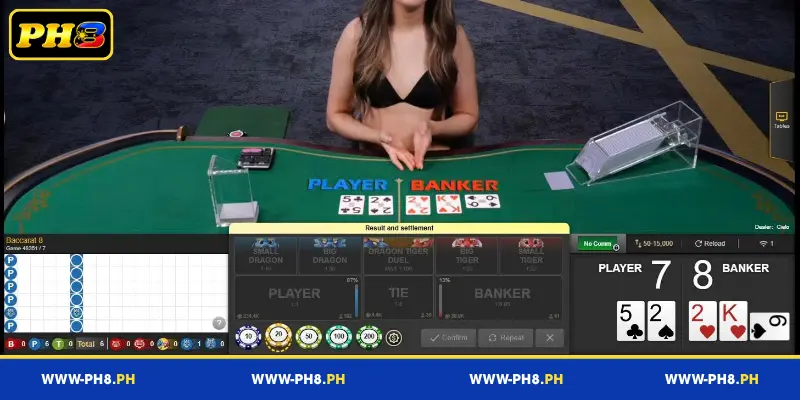
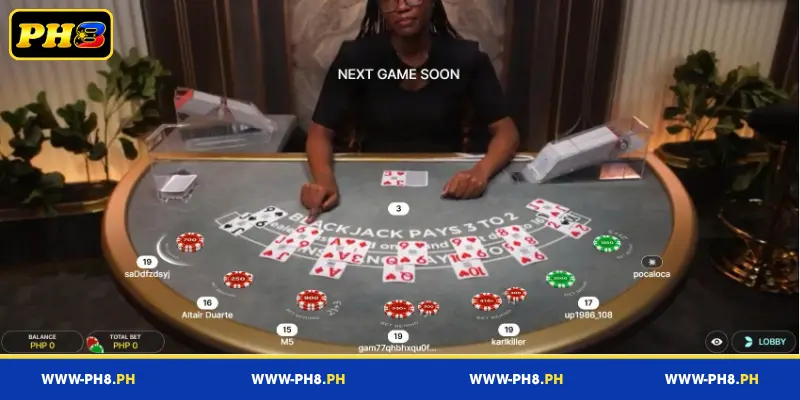
A standard round begins after players place initial bets across seven available table seats or utilize the unlimited Bet Behind option. The dealer deals one card face up to each seat clockwise before taking one face-up card for the house. A second face-up card goes to each player while the dealer receives a second hidden card face down. If your initial two-card hand totals exactly twenty-one points consisting of an Ace and a ten-value card, you achieve natural Blackjack.
Natural Blackjack victories deliver a superior three-to-two payout ratio, beating any multi-card twenty-one total achieved later. If both player and dealer reveal natural Blackjacks simultaneously, the round ends in a push, returning the main wager. Understanding these core scoring principles establishes a solid foundation for evaluating upcoming strategic player choices during active dealing turns.
In-Game Player Decisions and Payout Dynamics
Mastering real-time tactical choices allows players to optimize winning odds based on active dealer upcards and dealt totals. Understanding when to Double, Hit, Stand, or Split provides crucial control over potential return ratios during live gameplay.
Key Tactical Options and Rules
To help you evaluate available tactical choices during active card distribution rounds, the structured overview below outlines standard player decisions alongside primary rules and payout structures.
| Decision Type | Trigger Condition | Primary Action Rule | Standard Payout |
| Natural Blackjack | Ace + 10-value card on deal | Winning automatic two-card 21 | 3 : 2 |
| Hit | Total count under 21 | Receive additional card clockwise | 1 : 1 |
| Stand | Satisfied with hand total | End turn without taking extra cards | 1 : 1 |
| Double Down | Any initial two cards | Double main wager and take one card | 1 : 1 |
| Split | Pair of equal value cards | Form two separate hands with equal bet | 1 : 1 |
| Insurance | Dealer shows upcard Ace | Optional side wager half of main bet | 2 : 1 |
| Cash Out | Offered before dealer turn | Early hand payout settlement option | Variable |
Strategic Execution of Hit Stand and Double Down
Player actions progress sequentially around the live table once initial dealing finishes without immediate house Blackjacks. Selecting Hit adds another card to your total, allowing multiple hits until satisfied or until exceeding twenty-one results in a bust. Choosing Stand locks your current score, ending further card distribution for that specific hand.
Doubling down presents a powerful tactical option when initial two-card combinations display strong winning potential. This choice doubles your original wager while granting exactly one final additional card to complete your hand count. Note that doubling is restricted to initial two-card combinations and is disabled following pair splitting.
Selecting these core actions requires evaluating both your current hand value and the dealer’s visible upcard. Players often stand on hard totals of seventeen or higher to eliminate bust risks while forcing house draws. Strategic execution of hit, stand, and double options maintains maximum mathematical efficiency across extended playing sessions.
Pair Splitting Rules and Insurance Protection
When dealt an initial pair of equal-value cards, players can Split the pair into two independent hands. Splitting requires placing a second wager equal to the initial main bet onto the second hand. Additional cards are dealt to both hands, which can then be played normally through Hits or Stands.
Splitting a pair of Aces carries specific restricted rules to maintain table balance. Split Aces receive only one single additional card per hand with no further hitting permitted. Furthermore, achieving a twenty-one total on a split hand counts as a standard twenty-one rather than a natural Blackjack.
Insurance becomes available whenever the dealer’s visible upcard shows an Ace. Purchasing insurance costs half your original main bet and pays two-to-one if the hidden downcard reveals a ten-value card. This optional side wager settles independently from main hand results, protecting bankrolls against house natural Blackjacks.
Live Table Features and Operational Standards
The digital interface provides real-time multi-angle streaming with seamless touchscreen interactive controls. Clear chip selections ranging from low amounts to high limits allow flexible wager management across rounds. An optional Cash Out feature allows players to settle active hands early based on current score calculations.

Interactive Interface and Early Settlement
Modern table interfaces enhance player convenience by displaying real-time hand values directly next to active cards. The Cash Out feature provides a dynamic settlement option before the dealer reveals their face-down card. Payout values fluctuate based on your total points compared against the dealer’s upcard strength.
Utilizing early settlement options helps players mitigate risk during uncertain table scenarios. Players can secure guaranteed partial returns on volatile hands or lock in profits when holding advantageous scores. Customizable settings allow users to toggle cash out button visibility based on personal gameplay preferences.
House Standing Rules and Settlement Guidelines
House operational guidelines enforce strict automated rules governing dealer decisions during final hand reveals. The live dealer must draw additional cards on any total of sixteen or lower. Conversely, the dealer must Stand on all soft seventeen totals or higher, ensuring predictable mathematical house behavior.
When dealer hand totals exceed twenty-one points, all remaining active player hands win standard one-to-one payouts. Tied scores between non-busting player hands and dealer hands end in a push, returning original stakes. These transparent operational standards maintain complete integrity across every dealt hand.
Conclusion
Understanding card scoring rules, strategic decision options, and dealer standing requirements elevates overall table performance. Combining disciplined bankroll control with timely Double, Split, or Cash Out choices transforms simple card draws into rewarding strategic sessions. Playing PH8 Black Jack delivers an authentic casino atmosphere backed by smooth live dealer technology and flexible table choices. Exploring these dynamic card features through PH8 guarantees an unmatched gaming journey.
Pingback: PH8 Tai Xiu - Master High Stakes Dice Rolling Strategy